Carbon monoxide forms when gas burns without enough air. A dirty burner, a blocked flue, a cracked heat exchanger or a closet starved of combustion air can each cause it.
Service · Alhambra, CA
Gas Furnace Safety Signs in Alhambra, CA
A gas furnace gives warning signs before it becomes a hazard, and each sign has a clear first response. The response is the same every time: protect the people in the house first and diagnose the furnace second.
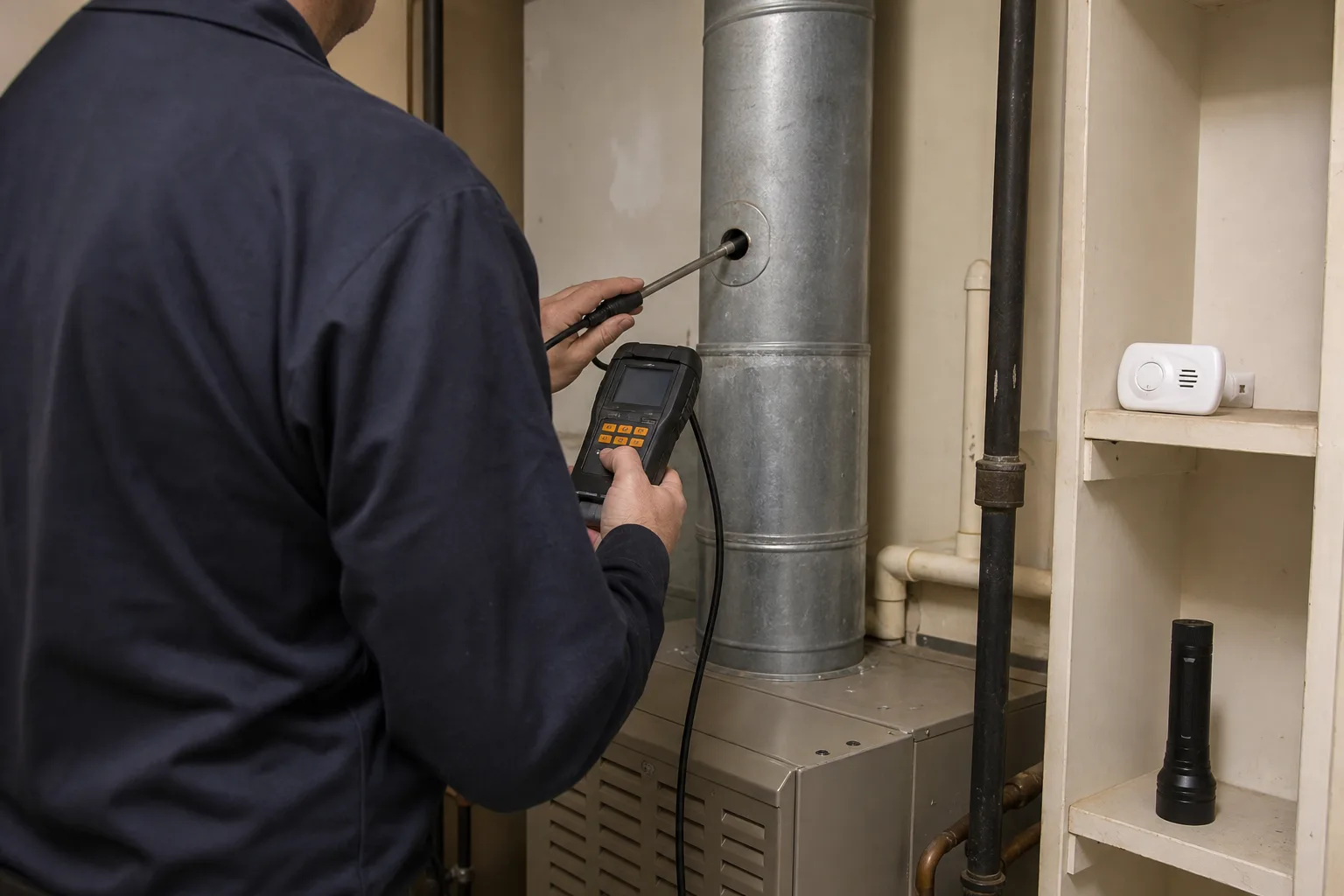
What you are seeing
Warning signs and what each one points to
- Carbon monoxide alarm
Sounding means combustion gas is in the living space, whatever the furnace appears to be doing.
- Gas odor
Odorized gas smells of rotten eggs and signals a leak at a joint, valve or connector.
- Yellow or lazy flame
Healthy burners show a steady blue flame, and yellow tips indicate poor combustion.
- Soot around the cabinet
Black deposits mean the flame is burning incompletely or flame is rolling out.
- Scorched burner box
Heat marks at the front of the burners point to flame rollout.
How it works
How a furnace produces carbon monoxide
The gas is colorless and odorless. It displaces oxygen in the blood, so the first symptoms are a headache, nausea and drowsiness that many people mistake for the flu.
Property type
Where Alhambra homes are most exposed
Older bungalows were built with natural-draft furnaces and water heaters that share a flue, and weatherstripping added later makes the house tighter than the original design expected. A furnace closet next to a bedroom puts the sleeping area a few feet from any leak.
- Shared flues
A weak draft at the water heater can spill gas into the same space.
- Sealed closets
Little incoming air makes the burners run rich.
- Bedroom proximity
A furnace beside sleeping rooms leaves little margin.
Safety protocol
What to do when a sign appears
Alarm or odor
Get everyone outside, including pets, and leave the door open.
Call from outdoors
Call 911, and the gas utility if you smell gas.
Do not touch switches
Avoid lights, phones and appliances inside until the space is cleared.
Do not re-enter
Stay out until responders say the space is safe.
Leave the furnace off
A technician should examine it before it runs again.
If there is no gas odor and no alarm, describe what you noticed, and the call can say how to proceed.
(626) 687-0603Technique
How a furnace is tested after a warning sign
Ambient reading
A meter checks carbon monoxide in the room and at the supply registers.
Flue and draft
The vent is checked for blockage, disconnection and corrosion, and the draft is measured.
Combustion analysis
A probe in the flue reads carbon monoxide, oxygen and temperature at the burners.
Heat exchanger
A camera looks for cracks and rust holes.
Burner and rollout
Flame shape, burner ports and the rollout switch are examined.
Vent connections
Every joint from the draft hood to the roof jack is checked for gaps, sagging and rust stains.
Phase order
People before parts
The order is never negotiable: the space is ventilated, readings are taken, and only then does repair begin. A furnace that produced a warning sign stays off until the cause is found.
Local detail
Cold nights and closed windows in Alhambra
When a cool night arrives, Alhambra households close windows and start the furnace together, which tightens the house at the moment combustion air matters most. Los Angeles County fire agencies see most carbon monoxide calls in the first cold weeks.
Measured results
What a safe furnace shows afterward
- Room reading
Zero carbon monoxide in the room, at the registers and beside the cabinet door.
- Flue draft
Gases leave through the vent without spilling at the draft hood.
- Flame
Blue, steady and seated on the burner ports.
Triage order
Alarms that keep a household safe
California law requires carbon monoxide alarms in homes with fuel-burning appliances. Alarms belong near the bedrooms and on every floor of the house, tested monthly and replaced when the label says their life is over.
Scope: Emergency diagnostic dispatch, whole system replacement and ductwork replacement only. Scope and pricing are provided directly by independent licensed contractors.
Common questions
Questions about gas furnace safety in Alhambra
Do these safety guides cover 91801, 91803 and 91804?
Yes, they apply to Alhambra homes in those three ZIP codes.
Can a furnace leak carbon monoxide without any smell?
Yes. The gas has no odor, which is why an alarm is the only warning most households get.
Is a yellow flame always dangerous?
Not always, but it indicates poor combustion that should be examined, since the same fault can produce carbon monoxide.
Should I keep running a furnace that smells of gas?
No. Leave the house, avoid switches and call the gas utility and 911 from outside.
A heating or cooling fault rarely fixes itself.
Call and describe the problem in Alhambra: what the system is doing, what it did first and how old the equipment is.