Cooling equipment is best tuned in spring, before the first heat wave stresses it. Heating equipment is best tuned in early autumn, before the first cold night finds a dirty sensor or a weak igniter.
Service category · Alhambra, CA
HVAC Maintenance and Tune-Up in Alhambra, CA
Most heating and cooling breakdowns in Alhambra begin as a slow decline that a tune-up would have caught: a dusty coil, a drifting capacitor, a film on a flame sensor. This page explains what maintenance actually measures and which page to read when the symptom is already showing.
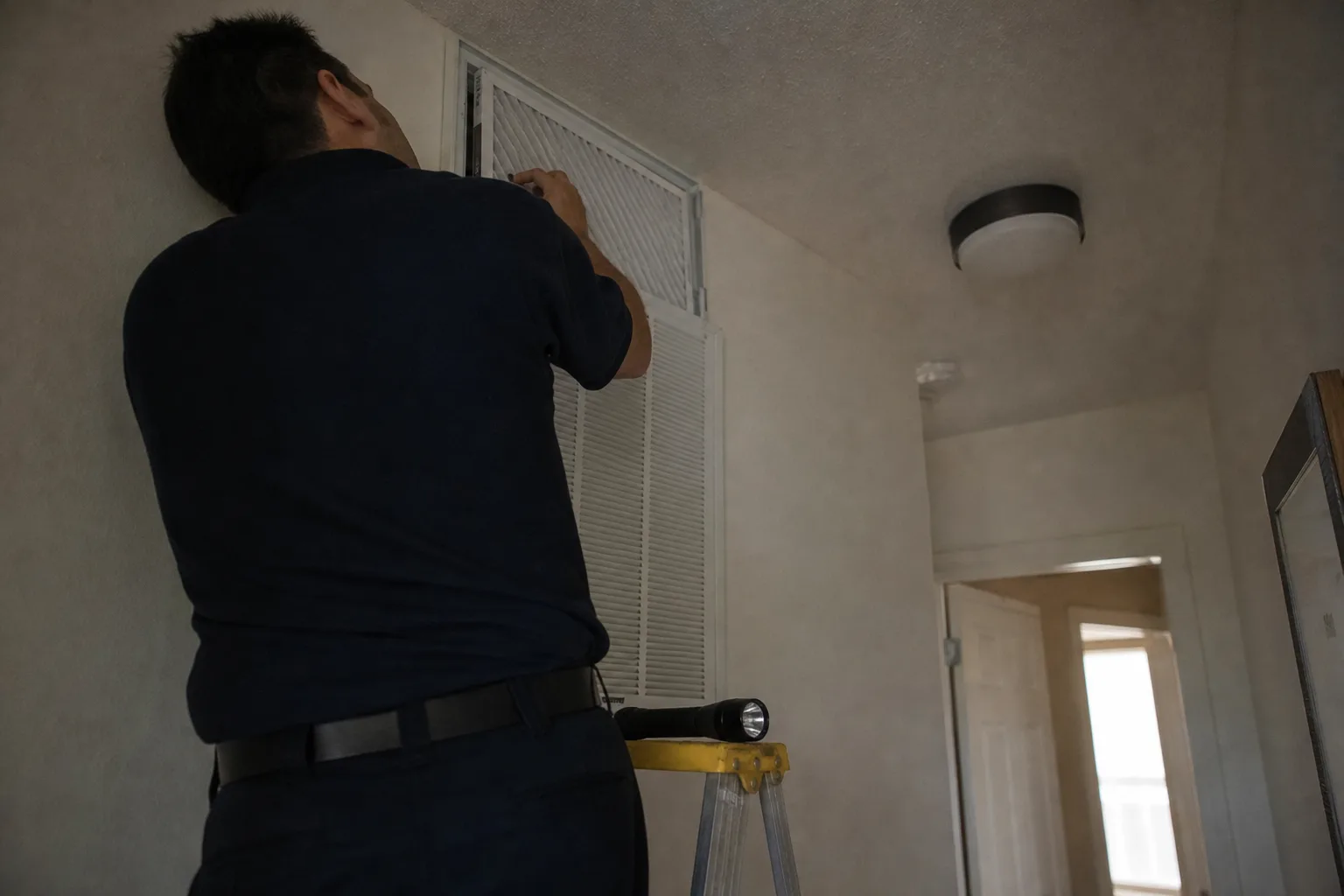
What you are seeing
Early warnings that a system needs attention
Systems rarely fail without notice. They tell you in small ways first, and each of these has its own page below.
- Short cycling
The system starts, runs briefly and shuts off, again and again.
- Weak airflow
Registers deliver less air than they used to, or some rooms get none.
- Thermostat trouble
The display is blank, the temperature reading is off or the schedule ignores itself.
- Rising run time
The system runs most of the afternoon to hold a setpoint it used to reach easily.
- New sounds or smells
Anything that was not there last season.
How it works
What wears out when nothing is done
Maintenance targets the slow processes that degrade performance before any part actually breaks. Each one raises the load on the next component in line.
- Dust on the coil
A thin film insulates the coil and cuts its heat exchange.
- Capacitor drift
Capacity falls below the rated microfarads, stressing the motors it starts.
- Sensor film
A coating on the flame sensor weakens its signal until the furnace shuts off.
- Drain buildup
Slime narrows the condensate line until the pan overflows.
- Loose connections
Heat cycles loosen terminals, which then run hot.
These processes compound. A dirty filter lowers airflow, which chills the evaporator coil, which lets ice form, which lowers airflow further. A tune-up interrupts that chain at its first link.
Property type
Dust, wind and attic heat in Alhambra homes
Alhambra sits in the San Gabriel Valley, where dry Santa Ana wind episodes and construction dust load filters and outdoor coils faster than the calendar suggests. Attic-mounted air handlers in older bungalows add summer heat that ages controls and insulation.
- Ceiling returns
A single hallway return pulls dust through one filter.
- Side-yard condensers
Walls and fences trap heat and collect leaf litter.
- Attic equipment
Heat above 100°F shortens the life of boards and wiring.
Technique
What a tune-up visit measures
A tune-up is a measured check, not a dusting. A technician records readings, compares them with the equipment's ratings and corrects what has drifted.
Airflow
Filter, blower wheel and the static pressure the ducts place on the blower.
Electrical
Capacitor values, contactor condition and motor amperage.
Heat exchange
Coil condition, temperature split and the refrigerant circuit's pressures.
Combustion
Burner flame, flame signal, venting and carbon monoxide on a furnace.
Drainage and controls
Condensate line, float switch and thermostat operation.
The readings are written down. A figure from this season is useful mainly because next season's figure can be set against it, and a slow change in amperage or temperature split shows up long before a failure does.
Describe the symptom or the season you are preparing for, and the call can point you to the right next step.
(626) 687-0603Phase order
The right season for each system
Triage order
Choose the page that matches your situation
The pages below cover a general tune-up, a cooling-season tune-up, a heating-season tune-up and the three symptoms most often traced to missed maintenance. Each explains what is measured and what the work involves.
- Included
Measurements, cleaning of accessible components, tightening of electrical connections and adjustment of settings.
- Not included
Replacing a failed part, repairing a refrigerant leak or replacing a system, each of which is scoped separately with the independent technician.
- Possible outcome
A finding such as a weak capacitor or a cracked igniter, flagged before it fails on a peak day.
Choose your situation
Maintenance and tune-ups, by situation
- HVAC Maintenance / Tune-UpWhat a seasonal HVAC tune-up measures, how readings are compared over time and what to do between visits.
- Short CyclingA system that starts and stops repeatedly: airflow, limits, thermostat placement, sizing and charge.
- Weak AirflowRegisters delivering less air than before: filters, the blower, attic ducts and returns.
- Thermostat ProblemsBlank display, wrong reading, ignored schedule or no response: batteries, wiring, placement and settings.
- AC Tune-UpA spring cooling check: capacitor, contactor, condenser coil, temperature split and condensate drain.
- Furnace Tune-UpAn autumn heating check: igniter, flame sensor, heat exchanger, venting, gas pressure and carbon monoxide.
Measured results
What a completed tune-up should record
- Temperature split
Return and supply air differ by the expected margin in cooling.
- Motor amperage
Each motor draws current at or below its rating.
- Capacitor values
Measured microfarads sit inside the printed tolerance.
- Combustion readings
Carbon monoxide and flame signal are in range on a furnace.
Local detail
Climate Zone 9 and the workload on a system
Alhambra sits in California Climate Zone 9, with long hot summers and short mild winters, so cooling equipment carries most of the annual workload. A system in Los Angeles County that runs this many hours has the most to gain from a spring check.
Documentation
Permits, Title 24 and what a tune-up does not need
Routine maintenance and part-for-part repairs need no permit. Replacing a system is different: it is regulated work under California's Title 24 and is permitted through the City of Alhambra Building Division.
A tune-up that reveals a failing system therefore leads to a separate conversation about scope, permits and duct testing.
Safety protocol
Maintenance tasks that are safe for a homeowner
- Filter
Replace it on a regular schedule and when it looks gray.
- Clearance
Keep plants and stored items at least two feet from the outdoor unit.
- Registers
Leave supply and return grilles open and unblocked.
- Everything else
Panels, wiring and refrigerant lines belong to a technician.
- Thermostat batteries
Replace them each season, since a dead display can look like a dead system.
How it works
Why airflow is measured instead of judged by feel
Hand-feel at a register misleads, because a strong stream from a leaky duct can still mean the room is under-served. A technician measures static pressure, the resistance the filter, coil and ducts together place on the blower, and compares it with the figure the blower is built for.
High static pressure points to a restriction such as a clogged filter, a crushed duct or an undersized return. Low static pressure with weak rooms points to leaks that spill air into the attic before it reaches the room.
Scope: Emergency diagnostic dispatch, whole system replacement and ductwork replacement only. Scope and pricing are provided directly by independent licensed contractors.
Common questions
Maintenance questions from Alhambra homeowners
Which Alhambra ZIP codes does maintenance guidance cover?
This site covers Alhambra homes in ZIP codes 91801, 91803 and 91804, within Los Angeles County.
How often should a heating and cooling system be tuned up?
Once a year is common, with cooling checked in spring and heating in autumn. Systems that run hard or sit in a hot attic benefit from both.
Does a tune-up need a permit in Alhambra?
No. Routine maintenance needs no permit. A system replacement is permitted through the City of Alhambra Building Division.
Can a tune-up prevent every breakdown?
No, but it finds the slow declines, such as a weak capacitor or a dirty sensor, that lead to many of them.
What should I do before a tune-up visit?
Replace the filter, clear the area around the outdoor unit and note any symptoms such as noises, short cycles or rooms that stay warm. The notes help the technician find drift that readings alone might miss.
A heating or cooling fault rarely fixes itself.
Call and describe the problem in Alhambra: what the system is doing, what it did first and how old the equipment is.